Procurement · Supply Chain · Transformation

Turn complexity into measurable value.

Independent advisory for companies that want to reduce structural cost, strengthen procurement, increase supplier resilience and build faster, more efficient supply chains.

Advisory focus

Procurement and supply chain, end to end.

Support spans commercial strategy, strategic sourcing, supplier risk, planning, internal material flow, transport and warehousing. The objective is durable improvement across cost, cash, service, compliance and resilience — not isolated savings.

Transformation grounded in operations.

Each engagement starts with facts: spend and demand patterns, category economics, contract coverage, supplier concentration, process maturity, network constraints, service levels and operational performance.

From there, priorities are converted into quantified workstreams covering sourcing, contract and supplier management, process redesign, logistics and working capital — with clear owners, economics and implementation milestones.

Strategy matters only when it changes decisions, behaviors and results.

Projects can be structured as executive advisory, interim leadership, targeted sourcing programs, procurement transformation or end-to-end supply chain improvement.

01Value capture

Spend analytics, demand and specification optimization, TCO models, sourcing execution, negotiation and savings tracking.

02Operating model

Roles, governance, category ownership, sourcing processes, source-to-pay interfaces and KPI routines.

03Risk & resilience

Supplier segmentation, dependency mapping, financial and operational risk, contingency plans and alternative supply options.

04Digital & data

Spend visibility, dashboards, contract data, supplier intelligence, workflow automation and fit-for-purpose S2P / WMS requirements.
CostTCO, demand, sourcing, productivity
Cashinventory, terms, working capital
Risksuppliers, continuity, resilience
Core services

Focused expertise where value is won or lost.

Click any area to see the typical scope, management question and output.

01

Cost Optimization

Build an evidence-based cost baseline and identify structural savings across price, specification, demand, process and total cost of ownership.

↗
Typical workCost baseline, should-cost logic, demand levers, value engineering, TCO analysis.
Key questionWhich costs are structural, which are negotiable and which can be removed?
OutputPrioritized value pipeline with owners, timing and implementation economics.
02

Procurement Excellence

Strengthen procurement governance, category management, operating model, skills, analytics and interfaces with the business.

↗
Typical workOperating model, category framework, procurement KPIs, governance, capability roadmap.
Key questionIs procurement acting as a transactional function or a value-creation partner?
OutputTarget operating model and prioritized capability-building roadmap.
03

Risk & Supplier Management

Segment suppliers, expose dependencies and convert risk assessment into differentiated governance, mitigation and supplier development.

↗
Typical workSegmentation, risk heatmaps, performance reviews, development plans, contingency design.
Key questionWhere could supplier failure stop revenue, production or customer service?
OutputSupplier risk portfolio and management cadence linked to business criticality.
04

Supply Chain Management

Connect procurement, planning, inventory, production, logistics and customer service into one end-to-end performance model.

↗
Typical workNetwork scenarios, demand and inventory logic, S&OP interfaces, service-level design, Make-or-Buy and working-capital trade-offs.
Key questionIs the supply chain optimized end-to-end or only within functions?
OutputTarget network and operating principles tied to cost, service, cash and resilience.
05

Strategic Sourcing

Run structured category and sourcing processes from market intelligence through supplier selection, negotiation and contracting.

↗
Typical workCategory strategy, supplier discovery, market intelligence, RFI/RFQ, clean-sheet / TCO comparison, negotiation, award and contracting strategy.
Key questionWhat is the right market, supplier mix and commercial model for the next 3–5 years?
OutputImplemented sourcing decision with transparent commercial and risk rationale.
06

Internal Supply Chain

Improve flow of material and information inside operations: replenishment, line feeding, WIP, handling, layout and warehouse-production interfaces.

↗
Typical workFlow mapping, bottlenecks, buffers, Kanban/JIT/VMI concepts, supermarket and line-feeding design, material handling and layout logic.
Key questionWhere do waiting, movement, excess stock and unclear ownership destroy flow?
OutputFuture-state process, implementation backlog and operational KPI set.
07

Transport IN / OUT

Optimize inbound and outbound transportation across lane structure, carrier portfolio, rates, capacity, service and tender strategy.

↗
Typical workLane and shipment-profile analysis, freight tender, carrier portfolio, rate logic, consolidation, routing guide and service-level design.
Key questionWhich transport model delivers the best balance of cost, reliability and flexibility?
OutputOptimized carrier and lane strategy with measurable savings and service targets.
08

Warehousing

Improve warehouse footprint, capacity, process, labor productivity, layout, automation logic and WMS requirements.

↗
Typical workWarehouse audit, capacity and labor model, layout and slotting, picking/replenishment logic, automation assessment, WMS requirements and business case.
Key questionHow can the warehouse deliver higher throughput and service with lower structural cost?
OutputFuture-state warehouse concept and implementation business case.
Extended capabilities

Modern procurement is a value engine, not only a buying function.

The strongest procurement organizations combine commercial discipline with data, contract governance, supplier intelligence and cross-functional execution. These capabilities can be built selectively or as one transformation program.

Spend intelligence

See where value leaks.

Clean spend taxonomy, addressable-spend view, price-volume-mix analysis, compliance leakage and opportunity heatmaps that focus management attention on the largest value pools.

Category management

Turn sourcing into a strategy.

Category segmentation, market intelligence, cost drivers, demand levers, supplier landscape, negotiation logic and multi-year category roadmaps.

Contract lifecycle

Protect negotiated value.

Contract coverage, obligation tracking, renewal discipline, indexation logic, commercial compliance and reduction of value leakage after signature.

Supplier performance

Manage critical suppliers differently.

Segmentation, scorecards, QBR cadence, corrective actions, development plans, dependency analysis and executive governance for strategic relationships.

Source-to-pay

Remove friction from execution.

Process redesign across requisition, sourcing, contracting, ordering, receiving and invoice interfaces, supported by automation and pragmatic technology requirements.

Resilience & localization

Design optionality deliberately.

Dual- and multi-sourcing, local / nearshore scenarios, country-of-origin exposure, supplier discovery and business cases balancing landed cost, lead time and continuity risk.

Approach

From diagnostic to realized value.

A compact delivery model designed to avoid “strategy deck only” outcomes and keep decision-making close to implementation.

01 / DIAGNOSE

Baseline reality

Establish the spend, cost, process, supplier, service and capability baseline.

02 / DESIGN

Build options

Develop scenarios, quantify trade-offs and define the target model and decision criteria.

03 / DELIVER

Execute change

Run sourcing, supplier, logistics and governance actions with owners and milestones.

04 / EMBED

Make it stick

Track benefits, strengthen routines, transfer know-how and build internal capability.

Transformation controlillustrative
360° value view
CostTCO & margin
Cashinventory & terms
Riskcontinuity & exposure
What success looks like

Measure what changes the business.

A procurement saving that damages service, increases inventory or creates supplier failure is not value. Benefits should be managed as cross-functional business outcomes.

  • Commercial purchase price, TCO, avoidance, demand
  • Operational OTIF, lead time, productivity, capacity
  • Cash inventory, payment terms, working capital
  • Risk dependency, resilience, recovery options
Perspective

Resilient supply chains are not built by choosing global or local. They are built by knowing where scale matters, where proximity matters, and where optionality is worth paying for.

Strategic sourcing

Localization as a portfolio decision

Nearshoring or local sourcing can reduce selected lead-time, geopolitical and transport exposures, but should be tested against capacity, technology, quality and total landed cost.

Market structure → scenario → decision ↗
Supplier resilience

Move from scorecards to action

Supplier management creates value when segmentation drives differentiated governance: development for strategic partners, recovery for underperformers and contingency planning for critical dependencies.

Segment → develop → mitigate ↗
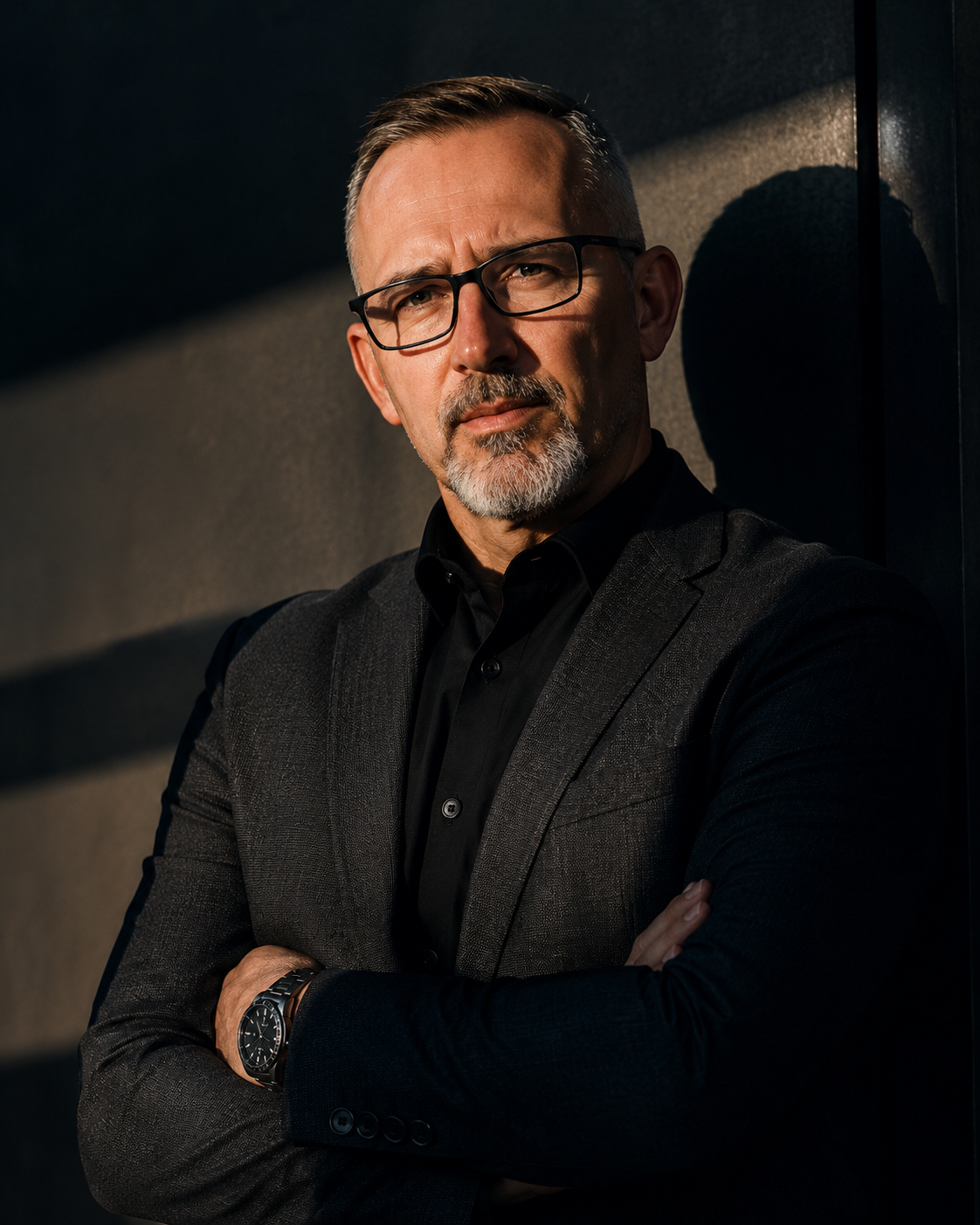
Paweł
Start a conversation

Make the next move measurable.

Bring a sourcing challenge, supplier risk, logistics cost issue or transformation agenda. The first discussion should clarify the problem, value at stake and the smallest useful next step.

Advisor
Pawel Reczuch — Procurement & Supply Chain
Location
Poland / Europe / International
Format
Advisory · Interim · Project delivery
pawel@reczuch.com ↗